

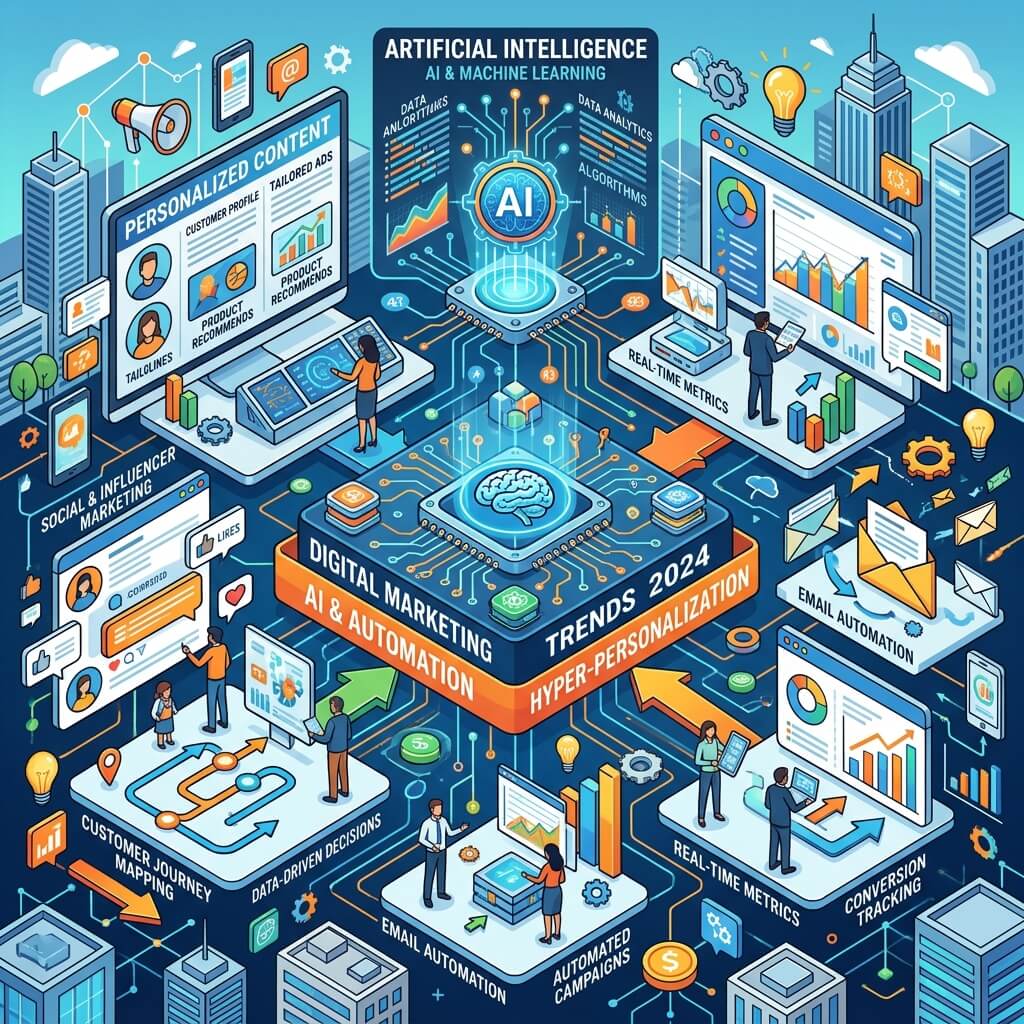
The digital marketing world underwent a fundamental transformation in 2024. The proliferation of AI, a privacy-focused internet ecosystem, and shifting consumer behavior have forced brands to redesign their strategies. In this article, we cover the standout trends and how you can apply them to your business.
AI Is Now at the Core of Advertising
Google's Performance Max and Meta's Advantage+ campaigns have placed artificial intelligence at the very center of ad optimization. These systems automatically optimize target audiences, bidding strategies, and even creative assets — significantly reducing the manual workload for advertisers.
Small and medium-sized businesses can also achieve higher returns with lower spending thanks to AI-powered campaigns. However, proper setup and regular optimization are critical. Setting it and forgetting it can mean wasting your entire budget.
AI accelerates advertising; but strategy and creativity must still come from human hands.
Personalization: Not an Expectation — a Requirement
Consumers no longer respond to generic messages — they respond to content that speaks directly to them. Research shows personalized email campaigns achieve 26% higher open rates compared to generic campaigns.
For personalization to work effectively, collecting first-party data is essential. As cookie restrictions increase, data gathered from your own channels becomes increasingly valuable. You can collect this data using:
- Email lead magnets (free content, discount codes, memberships)
- Loyalty and rewards programs
- Short feedback surveys
- Personalized content gates
Video Marketing Continues to Lead
Short-form video content continues to dominate across platforms. TikTok, Instagram Reels and YouTube Shorts have become the channels where brands can reach the widest audiences in the shortest time. 2024 data shows users spend an average of 17 minutes daily watching short video content.
A notable trend: Authenticity and realness. Overly produced, "perfect-looking" content is giving way to more natural, genuine videos. Audiences prefer seeing the human face of brand communications — meaning effective content is possible even without large production budgets.
Build a First-Party Data Strategy
With Google's gradual phase-out of third-party cookies, building your own data strategy has become vital. First-party data consists of email addresses, purchase history, site behaviors, and CRM records.
By intelligently using this data, you can segment your audiences, deliver tailored messages to each segment, and dramatically optimize your ad spend. Consent-based data collection is the only sustainable path for both GDPR/KVKK compliance and long-term brand trust.
Omnichannel Approach Is Now Standard
Customers now experience a brand not just on one channel but across multiple touchpoints. A product discovered on social media gets researched on a search engine; reminded by email, that product is ultimately purchased.
For a successful omnichannel strategy, all channels must carry a consistent message and visual identity. While each channel requires its own content format, the brand voice should never be inconsistent. A CRM infrastructure that unifies customer data across all channels plays a critical role here.
Update Your Measurement and Attribution Model
The last-click attribution model is no longer sufficient. The customer journey is far more complex — a user typically reaches your brand through 7-8 touchpoints before making a purchase. Data-driven attribution models and GA4's multi-channel conversion reports allow you to direct your marketing budget to the right channels.

