

The web design world never stands still — every year brings shifts in user expectations, browser technologies, and search engine algorithms. In 2026, having a successful website means far more than just looking great. Your site needs to load fast, work flawlessly on mobile, guide visitors intuitively, and ultimately convert them into customers. This guide covers the most critical web design trends of 2026 and how to apply them to your project.
User Experience (UX) Comes First
Google's Core Web Vitals metrics are now confirmed ranking factors. Your Largest Contentful Paint (LCP), Interaction to Next Paint (INP), and Cumulative Layout Shift (CLS) scores directly impact both your search ranking and user satisfaction. In 2026, successful sites are those that clear the "good" threshold across all three metrics.
Mobile-first design is no longer optional — it's a necessity. Over 75% of internet traffic in Turkey comes from mobile devices. A design where users can navigate comfortably with their thumbs, text remains readable on small screens, and forms are easy to fill out directly impacts your conversion rate.
Accessibility can no longer be overlooked. WCAG 2.2 standards are critical for both legal compliance and reaching wider audiences. Sufficient color contrast, keyboard navigation, and screen reader compatibility have become fundamental requirements of professional web design.
- LCP target: under 2.5 seconds
- INP target: under 200ms
- CLS target: under 0.1
- Mobile page load time: under 3 seconds
Visual Design Trends
The leading visual design trends of 2026 may seem contradictory at first glance, but they converge on a common principle: meaningful simplicity. Minimalism remains a powerful trend — but this time it's not about empty white space; it's about purposeful, breathing compositions that serve the user.
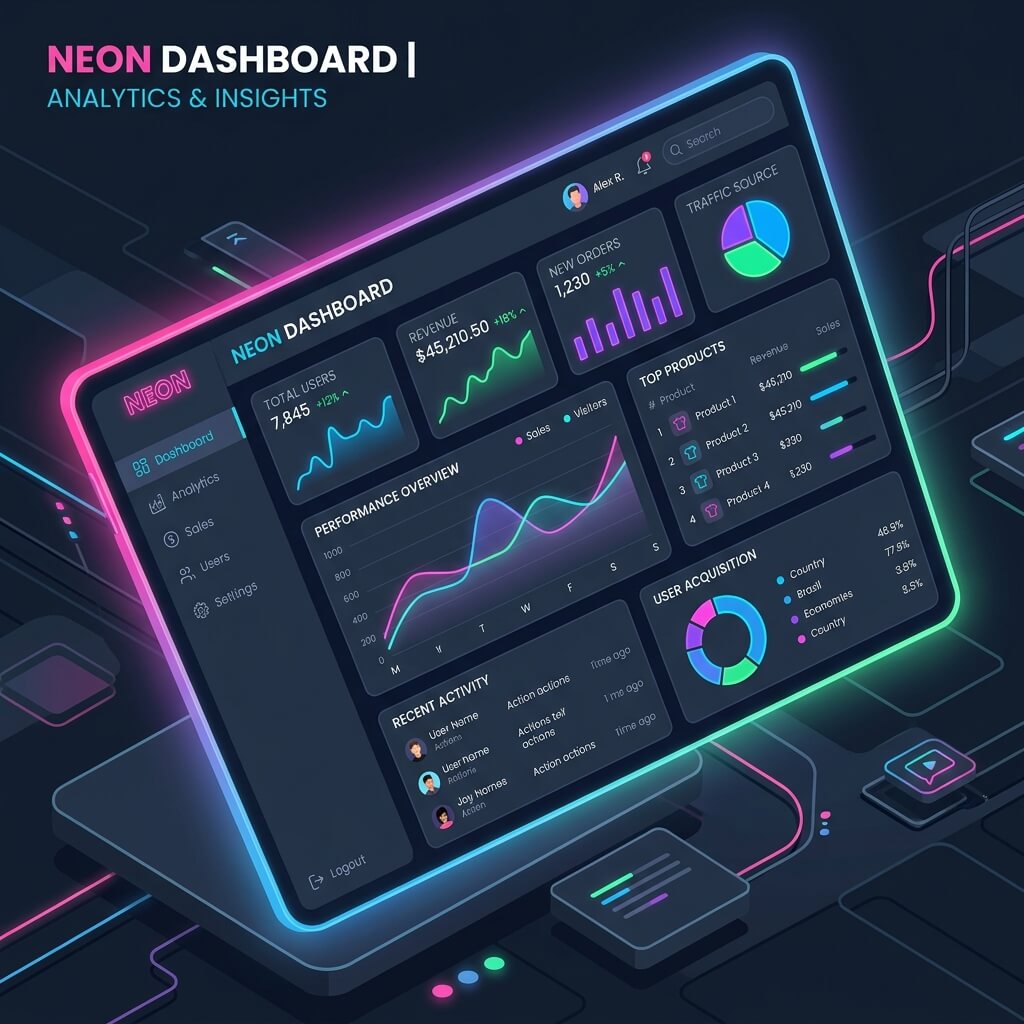
Dark mode design reached maturity in 2026. Beyond aesthetic preference, it offers concrete advantages: reduced eye strain and battery savings on OLED screens. This trend is becoming standard, especially in tech and creative industries. Many sites now automatically switch themes based on the user's system preference.
Vibrant gradients and fluid color transitions have replaced flat design. Striking combinations like purple-to-blue or pink-to-orange capture attention while reinforcing a brand's digital identity. Micro-animations stand out as small but powerful details that provide user feedback, increase engagement, and make pages feel alive.
AI-generated imagery is transforming stock photo usage. Brand-specific visuals with no copyright concerns can now be produced in minutes. However, ensuring AI visuals are used consistently with the brand's overall aesthetic still requires a professional designer's oversight.
Conversion-Focused Design
Aesthetics matter — but the ultimate goal of your website is to move visitors to action. Conversion Rate Optimization (CRO) encompasses every element that makes it easier for users to decide to purchase, fill out a form, or get in touch.
CTA (Call-to-Action) placement is perhaps the most critical factor. Research shows CTAs positioned "above the fold" — visible without scrolling — receive 47% more clicks. Color, size, copy, and positioning should all be refined through A/B testing. Risk-reducing language like "Try Free for 14 Days" instead of "Buy Now" can significantly boost conversion rates.
Form optimization is equally important. Remove unnecessary fields — for a contact form, name, email, and message are sufficient. Multi-step forms achieve an average 86% higher completion rate than long single-page forms. Social proof elements — customer reviews, client logos, real project counts — build visitor trust and accelerate decision-making.
A great website isn't just beautiful — it's a sales machine that converts visitors into customers.
Technical Infrastructure and Speed Optimization
In 2026, technical infrastructure is as important as design. Modern JavaScript frameworks like Next.js, Nuxt, and Astro combine static site generation with server-side rendering, delivering both speed and SEO advantages. Headless CMS architectures decouple content management from the frontend, improving both developer experience and performance.
Image optimization is now a fundamental requirement. WebP and AVIF formats offer 30–50% smaller file sizes compared to JPEG without sacrificing visual quality. Lazy loading ensures only images in the visible viewport are loaded, delivering dramatic speed gains on content-heavy pages.
Using a CDN (Content Delivery Network) can cut page load times in half for global audiences. Font optimization, inlining critical CSS, and loading third-party scripts asynchronously are other key pillars of technical optimization. All of these steps positively affect not only Google rankings but also time-on-page and conversion rates.

